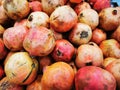
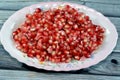
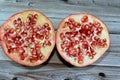
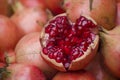
The pomegranate (Punica granatum) is a fruit-bearing deciduous shrub in the family Lythraceae, subfamily Punicoideae. A pomegranate is a round, reddish fruit from a shrub or small tree, known for its tough, leathery skin and distinctive crown-like calyx. Inside, it's divided by membranes into chambers filled with hundreds of juicy, jewel-toned sacs called arils, each surrounding a tiny seed the arils provide a sweet-tart, often tangy, flavor and are rich in antioxidants, fiber, and vitamins. Plant & Appearance Plant: A large shrub or small tree, growing up to 16 feet, with bright green leaves that turn yellow in fall and vibrant red or orange trumpet-shaped flowers. Fruit Shape: Globular, often slightly hexagonal, about the size of an orange or baseball.Rind (Pericarp): Thick, leathery, and typically red, though colors vary features a unique "crown" (the persistent calyx) at the top. Inside the Fruit Structure: Divided by papery, membranous walls (septa) into compartments (locules).Arils: The edible part, these are fleshy, translucent sacs (sarcotesta) surrounding each seed, ranging from white to deep red purple.Seeds: Contain a crunchy interior, sometimes eaten, sometimes too hard. Flavor & NutritionTaste: Varies from sweet to tart, depending on ripeness and variety.Nutrition: High in antioxidants (polyphenols like anthocyanins), Vitamin C, Vitamin K, fiber, and potassium. Common Varieties & Usage'Wonderful': The most common commercial variety, known for large fruit and tangy flavor.Uses: Eaten fresh (arils), juiced for drinks, jams, or used in culinary dishes.
|