nucleophile

navigate by keyword : water visual undergoing undergoes type transition top textbook tertiary teaching synthesis substitution study structure stereochemistry state stability sn2 sn1 showing science scheme right resource representation reaction progress product process primary pathway pair organic nucleophilic nucleophile notation movement molecule molecular model mechanisms mechanism left leaving kinetics ion involving intermediate illustration illustrates hydroxide halogenoalkanes halogenoalkane haloalkane h2o group geometry forming flow featuring energy electron education drawing diagram detailed curved coordinate

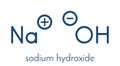
Sodium hydroxide lye, caustic soda, chemical structure. Skeletal formula. Royalty Free Stock Photo
electrophilia word block on white Royalty Free Stock Photo
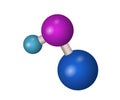
3D NaOH molecule. Royalty Free Stock Photo
Chemical reaction mechanism comparison between primary and tertiary halogenoalkanes in organic substitution reactions Royalty Free Stock Photo
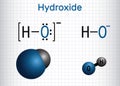
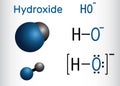
Hydroxide anion. Structural chemical formula and molecule model. Sheet of paper in a cage Royalty Free Stock Photo
3D image of 2H azirine skeletal formula Royalty Free Stock Photo
Hydroxide anion, chemical structure. Skeletal formula. Royalty Free Stock Photo
Chemical reaction mechanism diagram showing SN2 and SN1 nucleophilic substitution in primary and tertiary halogenoalkanes with
3D NaOH molecule. Royalty Free Stock Photo
Hydroxide anion, chemical structure. Skeletal formula. Royalty Free Stock Photo
l-cysteine molecular structure 3d, flat model, cysteine e920, structural chemical formula view from a microscope Royalty Free Stock Photo
Ethylamine organic base molecule Royalty Free Stock Photo
l-cysteine molecule, structural chemical formula, ball-and-stick model, isolated image cysteine Royalty Free Stock Photo
Ethylamine organic base molecule. Skeletal formula. Royalty Free Stock Photo
Hydroxide anion. Structural chemical formula and molecule model Royalty Free Stock Photo
A detailed chemical diagram illustrates the nucleophilic substitution reaction mechanisms SN2 and SN1 in halogenoalkanes, featuring a primary halogenoalkane on the left undergoing SN2 reaction with a hydroxide ion (OH-) forming a transition state and product, while a tertiary halogenoalkane on the top right undergoes SN1 reaction involving carbocation intermediate and water (H2O) as nucleophile,


Stockphotos.ro (c) 2026. All stock photos are provided by Dreamstime and are copyrighted by their respective owners.