chromosome

navigate by keyword : acid acrocentric adenine arm cell centromere chromatid chromosome coils cytokinesis cytosine deoxyribonucleic dna double egg fertilized gene genetic guanine helix histone histones homologous human metacentric mitosis molecules nucleosome nucleotides nucleus proteins sperm supercoils telomere thymine

Dna test infographic. Genome sequence map, chromosome architecture and genetic sequencing chart abstract data vector Royalty Free Stock Photo
Abstract luminous DNA molecule. Doctor using tablet and check with analysis chromosome Royalty Free Stock Photo
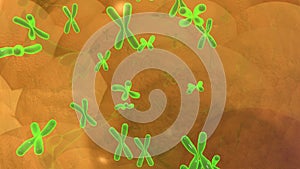
Chromosome Royalty Free Stock Photo
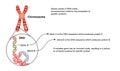
Chromosome and DNA Royalty Free Stock Photo
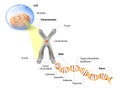
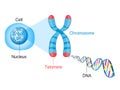
Cell, Chromosome, DNA and gene Royalty Free Stock Photo
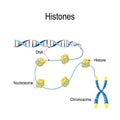
Histones. Schematic representation shows the organization and packaging of genetic material in Chromosome Royalty Free Stock Photo
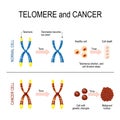
Chromosome and telomere for healthy and cancerous cells Royalty Free Stock Photo
Chromosome
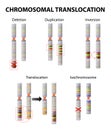
Mutation. Chromosome abnormality Royalty Free Stock Photo
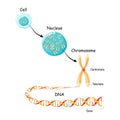
Cell - Nucleus - Chromosome - DNA, Medical vector diagram Royalty Free Stock Photo
XY Chromosome illustration Royalty Free Stock Photo
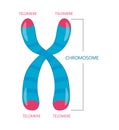
Telomere is the End of a Chromosome Royalty Free Stock Photo
From Gene to DNA and Chromosome in cell structure. genome sequence Royalty Free Stock Photo
Telomere Chromosome and DNA Royalty Free Stock Photo
Chromosome x, DNA Strands Royalty Free Stock Photo
In the nucleus of each cell, the DNA molecule is packaged into thread-like structures called chromosomes. Each chromosome is made up of DNA tightly coiled many times around proteins called histones that support its structure. Chromosomes are not visible in the cell’s nucleus—not even under a microscope—when the cell is not dividing. However, the DNA that makes up chromosomes becomes more tightly packed during cell division and is then visible under a microscope. Most of what researchers know about chromosomes was learned by observing chromosomes during cell division. Each chromosome has a constriction point called the centromere, which divides the chromosome into two sections, or “arms.” The short arm of the chromosome is labeled the “p arm.” The long arm of the chromosome is labeled the “q arm.” The location of the centromere on each chromosome gives the chromosome its characteristic shape, and can be used to help describe the location of specific genes.


Stockphotos.ro (c) 2026. All stock photos are provided by Dreamstime and are copyrighted by their respective owners.